
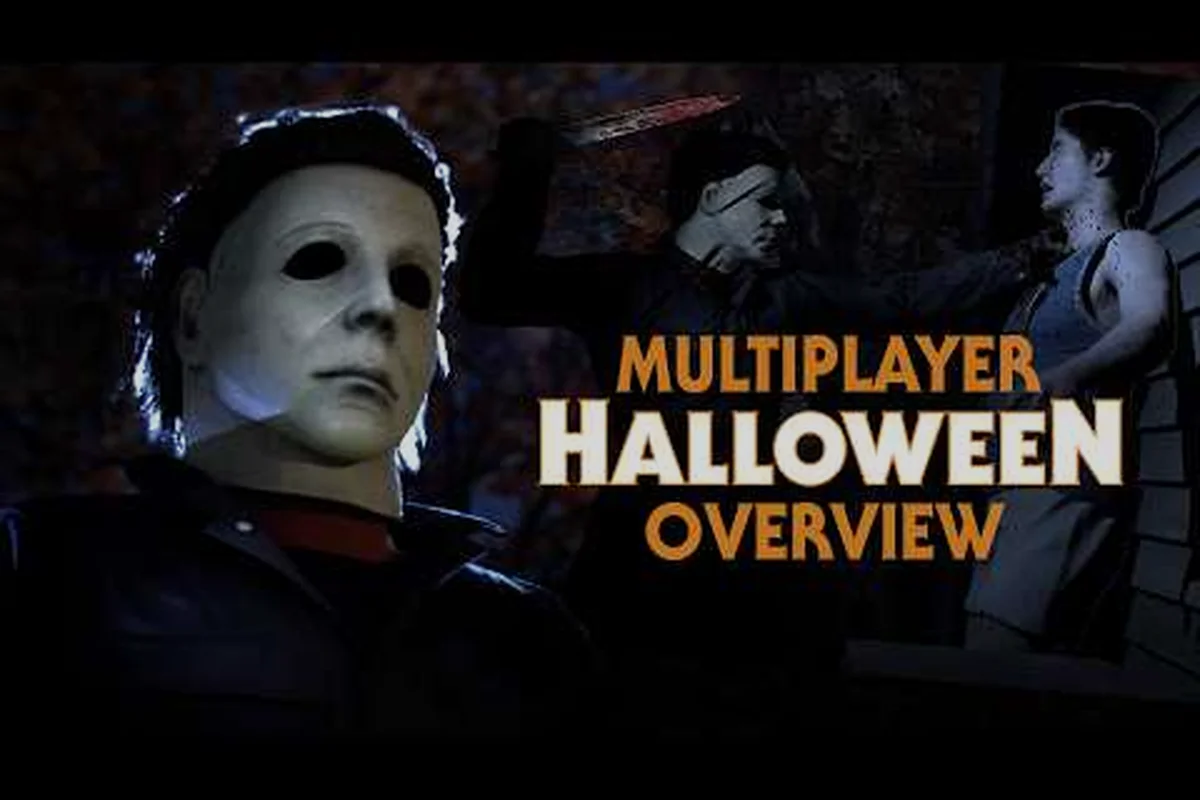
Surviving a night in Haddonfield is not about outrunning The Shape; it is about outlasting him through coordinated action. This heroes of Haddonfield guide breaks down the survivor side of Halloween: The Game, a 1v4 asymmetrical horror sandbox from IllFonic where four players must arm themselves, rally NPC townsfolk, and alert the police to push back against Michael Myers. The core loop is simple: every action you take as a group either buys you time or wastes it. Whether you’re focusing on repairing generators, stockpiling weapons, or shepherding survivors to safety, knowing how to split responsibilities can make the difference between a quick escape and a total wipe — a breakdown worth studying in our Hero Co Op Guide Halloween The Game before you commit to a role in that asymmetrical horror sandbox.
Core Survivor Loop and Role Distribution
The Heroes of Haddonfield are not a single class with fixed loadouts. Instead, the team succeeds by splitting responsibilities across the map while Michael stalks individual targets. According to the official Halloween: The Game on Steam page, survivors arm themselves with everyday household items and weapons, equip NPC townsfolk, and alert the police to summon escalating patrols. That three-part loop — arm, equip, alert — forms the foundation of every winning survivor match.
Understanding the loop means understanding what each objective actually costs. Arming yourself is fast but only helps one player. Equipping an NPC is slower but creates a second threat Michael must respect. Alerting the police is the slowest objective but applies map-wide pressure that compounds over time. A common mistake in early play is to treat all three objectives as interchangeable. They are not.
| Survivor Action | Time to Complete | Map Impact | Risk Level |
|---|---|---|---|
| Arm yourself | Fast (under 10 seconds) | Low — only you | Low |
| Equip an NPC | Medium (15-25 seconds) | Medium — one extra fighter | Medium |
| Alert the police | Slow (30+ seconds) | High — escalating patrols | High |
The table above illustrates why solo survivors often feel powerless. One armed hero is a nuisance to Michael. Four armed heroes plus two equipped NPCs plus an active police patrol is a genuine threat. The escalation matters more than any single weapon pickup because it changes the tempo of the entire match. Community reports from the official Halloween Game website confirm that teams who prioritize police alerts early tend to survive longer than teams who only scavenge for weapons.
Splitting Roles Without Splitting Up Completely
The tension in Halloween: The Game is that splitting up speeds up objective progress while staying together increases survival odds. The solution is not binary. A strong team runs a 2-1-1 split: two players handle NPC rescue and equipment, one player works on police alerts, and one player stays mobile as a scout and bait. This spread forces Michael to choose between stopping objectives or chasing the bait.
The bait player is the most underrated role in the hero strategy Halloween the game meta. A good bait player understands that Michael's stalk mechanic punishes players who stand still or move predictably. Running in straight lines away from The Shape is a death sentence. Instead, the bait should loop through houses, break line of sight, and use the map's geometry to waste Michael's time while the other three players complete objectives.
Each role has a distinct failure condition. The NPC rescuers fail if they cluster together and get downed simultaneously. The police alerter fails if they commit to the objective while Michael is nearby and unaccounted for. The bait fails if they try to fight instead of simply surviving. Recognizing which failure condition is active in the current match is the first step toward correcting course.
Weapon Sharing and NPC Rescue Mechanics
Weapon sharing is one of the most misunderstood systems in this heroes of Haddonfield guide. Many new players assume that finding a weapon means they should keep it. In practice, a weapon in the hands of the player who is best positioned to use it is worth more than a weapon in the hands of the player who found it. Sharing requires deliberate drops and communication, which is why the system rewards teams that talk.
The everyday household items that survivors find — kitchen knives, fireplace pokers, baseball bats, and similar improvised tools — have different reach and swing speed values. Community testing as of the current build indicates that reach matters more against Michael than raw damage because his grab range is significant. A weapon with longer reach lets you land a stagger without entering grab range, which creates a small but critical safety margin.
| Weapon Type | Reach | Swing Speed | Stagger Potential | Best User |
|---|---|---|---|---|
| Kitchen knife | Short | Fast | Low | Last-resort self-defense |
| Fireplace poker | Medium | Medium | Medium | Bait player |
| Baseball bat | Long | Slow | High | NPC escort or anchor |
| Improvised spear | Longest | Slowest | High | Police alerter on defense |
The stagger potential column deserves attention because it is the difference between escaping and getting grabbed. Michael cannot instantly recover from a stagger, which means a well-timed hit from a long-reach weapon creates a genuine escape window. Teams that prioritize baseball bats and improvised spears over faster but shorter weapons tend to survive more chases, according to player-reported data from early access sessions.
NPC rescue is the second pillar of the survivor objective set. Innocent families are scattered across the map, and rescuing them requires finding their location, clearing any immediate danger, and escorting them to safety or equipping them to fight back. An equipped NPC is not a full player replacement, but they create noise and occupy Michael's attention in ways that pure player actions cannot.
Equipping NPCs as Force Multipliers
When you equip an NPC townsfolk member, you are not just giving them a weapon — you are adding an unpredictable element to the map that Michael must track. NPCs do not follow perfect pathing, which can actually work in the survivor team's favor. A wandering NPC with a baseball bat is a threat Michael cannot safely ignore, and every second he spends dealing with an NPC is a second he is not hunting you.
The rescue cadence matters. Rescuing one family and immediately moving to the next is efficient on paper but often fails in practice because Michael will camp the second rescue location once he sees the pattern. Better teams vary their objective order and use the first rescue as bait to pull Michael away from the police alert objective. This kind of objective trading is the heart of advanced hero strategy halloween the game play.
One of the most reliable opening sequences reported by experienced survivor squads is: arm two players immediately, start the police alert with a third, and send the fourth to locate the nearest family. This opening applies pressure on three fronts simultaneously, which is difficult for even a skilled Michael to answer cleanly. The key is that no single objective is so important that losing it ends the match — the pressure comes from forcing Michael to make imperfect choices.
Police Alerts and Map-Wide Pressure
Alerting the police is the slowest but most impactful survivor objective in Halloween: The Game. When you successfully alert the police, patrols begin escalating across the map, and each escalation level increases the threat Michael faces. The official Steam description confirms that survivors "alert the police to summon escalating patrols," which means this is not a one-time buff but a scaling system that rewards repeated investment.
The police alert system creates a timer that Michael must respect. If he ignores the escalating patrols to tunnel a single survivor, the map becomes progressively more dangerous for him. If he diverts to stop the police alerts, the other survivors gain space to complete weapon and NPC objectives. This dynamic is what separates Halloween: The Game from simpler hide-and-seek horror titles.
| Alert Level | Patrol Behavior | Michael Counterplay | Survivor Advantage |
|---|---|---|---|
| Level 1 | Single patrol route | Ignore or avoid | Minor distraction |
| Level 2 | Two overlapping routes | Must track positions | Splits Michael's attention |
| Level 3 | Three routes plus checkpoint | Forced to engage or reposition | Map-wide threat |
| Level 4 | Saturation patrols | Cannot ignore | Survivor win condition |
The table above is based on community-observed escalation patterns as of the current build. Exact patrol routes vary by map and may shift with future patches, but the underlying logic holds: each alert level increases the cognitive load on the Michael player. A Michael who is tracking three patrol routes is not tracking survivor positions as effectively, which creates openings for rescues and weapon sharing.
Police alerts also have a psychological component that many guides miss. When Michael hears the alert siren and sees patrol lights, he feels pressure even if the actual mechanical impact is still modest at low levels. Exploiting that pressure — by making noise near the alert objective or faking a second alert attempt — can force Michael into bad rotations that cost him more than any single weapon hit would.
Survivor Communication and Callout Discipline
Communication is the single highest-leverage skill in how to play as a hero halloween the game. The difference between a team that calls out Michael's position and a team that plays silently is often the difference between a clean rescue and a total wipe. Callout discipline means giving useful, concise information without flooding comms with noise.
Effective callouts follow a simple pattern: location, action, threat level. For example, "Michael at the gas station, moving toward the diner, not chasing me" is a complete callout. "Michael near me" is nearly useless because it lacks location context. "He's over here somewhere" actively hurts the team because it creates uncertainty without actionable information.
| Callout Type | Example | Value | Common Mistake |
|---|---|---|---|
| Position callout | "Shape at the church, heading north" | High | "He's near me" |
| Objective status | "Police alert at 70 percent, need cover" | High | "I'm doing the thing" |
| Threat assessment | "He's chasing me, not going for the rescue" | High | "Help me" |
| Noise discipline | Silent during stealth phase | High | Constant chatter |
The noise discipline row is important because Michael's stalk ability rewards him for finding isolated or unaware survivors. A team that talks constantly gives away positions through audio cues that experienced Michael players exploit. The best survivor teams use push-to-talk selectively, call out only what matters, and stay silent during stealth phases or when Michael is close and unaccounted for.
Adapting Callouts When the Plan Fails
No plan survives contact with a good Michael. The mark of a strong survivor team is not perfect execution but fast adaptation when the opening sequence falls apart. If the police alerter gets downed early, the team must decide in seconds whether to commit to the rescue or abandon the objective and regroup. That decision should be made by whoever has the most information at that moment, not by a predetermined shot-caller.
Halloween the game hero guide content often overlooks the tilt factor. Survivor teams that lose one player early sometimes collapse because they keep trying to execute the original plan with three players. The correct response is usually to simplify: drop the slowest objective, consolidate into pairs, and rebuild pressure through weapon pickups and small rescues before attempting another police alert. Playing slower after a setback is counterintuitive but usually correct because Michael's advantage compounds when survivors panic.
Advanced Survivor Tactics and Michael Counterplay
Surviving against a skilled Michael requires understanding how he thinks. Michael's kit rewards patience and punishes predictable movement, which means the best survivor counterplay is controlled unpredictability. Never run the same escape route twice, never camp the same hiding spot after a successful escape, and always vary your objective order between rounds.
One of the most effective advanced tactics is bait-and-switch rescues. Send one player toward a family's location to draw Michael, then have a second player approach from a different angle while the first player breaks off. This works because Michael's stalk incentivizes him to commit to the first target he sees, and a good bait player can exploit that commitment to open space for the actual rescue.
| Michael Behavior | Survivor Counterplay | Risk | Reward |
|---|---|---|---|
| Tunnels one survivor | Bait player wastes time, others push objectives | Bait may go down | Major objective progress |
| Camps police alert | Trade objective, push NPC rescues | Lose alert progress | Rescue families safely |
| Plays stealthy, stalks | Stay grouped, use noise discipline | Slower objectives | Harder for Michael to isolate |
| Aggressive, chases everything | Spread out, trade hits for time | More downs overall | More total objective uptime |
The table above maps common Michael playstyles to survivor responses. The key insight is that no single counterplay works against every Michael — you must identify his style within the first few minutes and adjust. A Michael who tunnels is inviting you to complete objectives, while a Michael who plays slow and stalk-heavy is forcing you to group up and accept slower progress.
Using the Environment Against The Shape
Haddonfield's map layout offers specific advantages to survivors who know where to look. Line-of-sight breaks are everywhere — fences, hedges, parked cars, and building corners all disrupt Michael's stalk. A survivor who chains together line-of-sight breaks while moving unpredictably is far harder to track than one who runs in the open, even if the open runner is technically faster.
The vault and window system adds another layer. Certain windows can be vaulted quickly, and Michael must either break them or route around, which costs him time. Learning which windows are vaultable and which are dead ends is map knowledge that only comes from repetition. Community callouts shared through player experiences on the official IllFonic YouTube channel highlight how much of the game's depth comes from mastering these small environmental interactions.
Time management is the final advanced concept. Every second Michael spends breaking a door, vaulting a window, or walking around a fence is a second he is not pressuring survivors. Survivors who understand this play a completely different game — they play for time, not for kills or escapes. The win condition in Halloween: The Game is not to defeat Michael; it is to survive the night, and survival is a function of how efficiently you spend the clock.
Frequently Asked Questions
What is the most important objective for Heroes of Haddonfield?
Police alerts are the most impactful objective because they create escalating map-wide pressure that Michael cannot permanently ignore. However, early weapon pickups are essential for self-defense, and NPC rescues provide steady value. The best teams run all three objectives simultaneously through a 2-1-1 role split rather than prioritizing one.
How do I survive Michael Myers when he is tunneling me?
The key is to play for time, not for escape. Chain together line-of-sight breaks, use vaultable windows, and run unpredictable routes. Communicate your position and status so teammates can push objectives while Michael is committed to the chase. A long-range weapon with high stagger potential creates escape windows.
What weapons should I prioritize as a hero?
Baseball bats and improvised spears offer the best combination of reach and stagger potential, which keeps you outside Michael's grab range. Kitchen knives are last-resort tools. Share weapons deliberately — a weapon in the hands of the best-positioned player is worth more than one sitting in an inventory.
Can NPC townsfolk actually help against Michael?
Yes. Equipped NPCs create noise, occupy Michael's attention, and add unpredictable elements to the map. They are not full player replacements, but they force Michael to make choices about whether to deal with them or continue hunting players. Every second Michael spends on an NPC is time you can use.
How many police alert levels are there?
Community testing indicates four escalating patrol levels, from a single patrol route at Level 1 to saturation patrols at Level 4. Exact patrol behavior varies by map and may shift with patches, but each level increases the cognitive load on Michael and moves survivors closer to a win condition.