
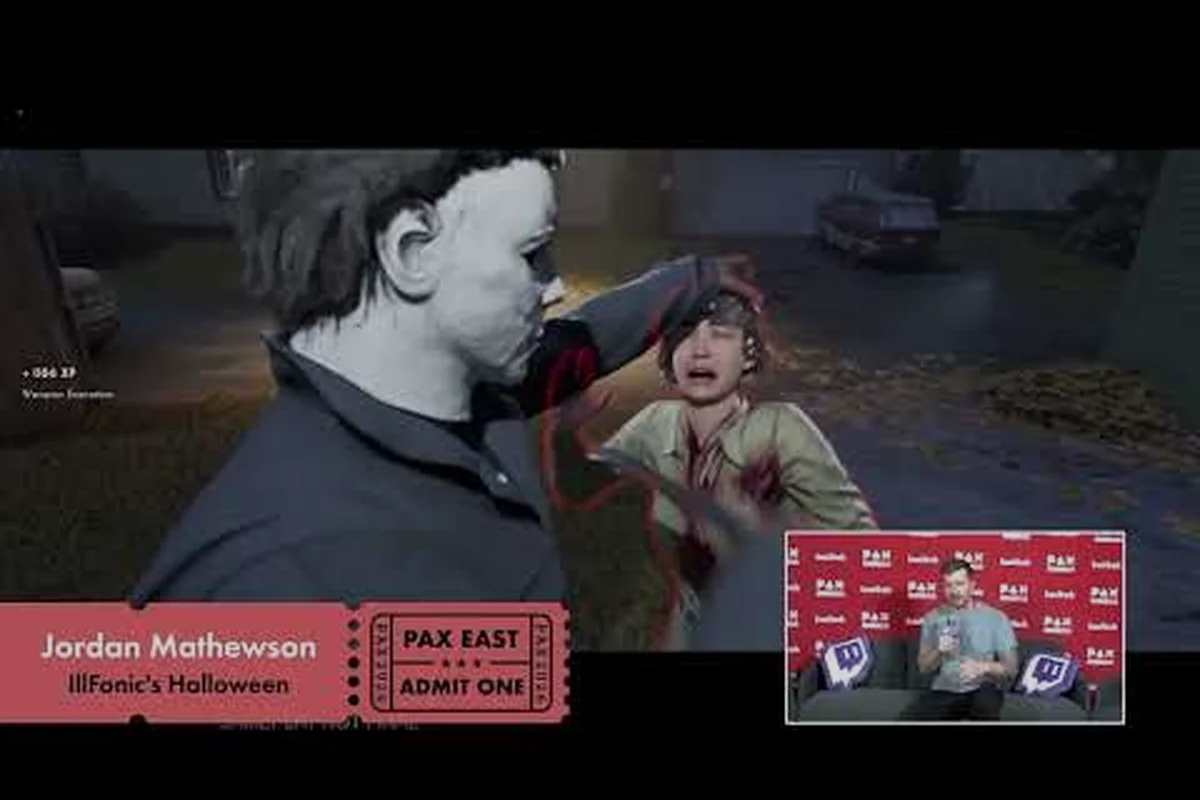
Haddonfield, Illinois. October 31, 1978. The wind rattles windows down Sycamore Street while four friends walk home from a neighborhood party, unaware that a shape is watching from the shadows of 1004 Elrod Street. This is the setting for Halloween: The Game on Steam, IllFonic's asymmetrical horror sandbox built in Unreal Engine 5. One player embodies Michael Myers, the Shape himself, hunting relentlessly through dark streets and suburban houses. Up to four others play as Heroes of Haddonfield, desperately gathering supplies, rescuing innocent families, and calling the police before Michael finds them. Understanding how both sides operate is essential to winning, and this Halloween: The Game full guide breaks down every core mechanic, role distinction, and strategy you need to survive the night or claim it. To get up to speed on those core mechanics, check out our Halloween The Game Tips for New Players guide, which offers a concise breakdown of the essentials.
Understanding the 1v4 Asymmetrical Structure
Every match of Halloween: The Game places two fundamentally different teams against each other with asymmetric information, abilities, and objectives. Michael Myers operates with omniscient map awareness and devastating physical power, while the Heroes rely on stealth, teamwork, and resourcefulness to outlast a relentlessly stalking killer. This structure creates tension that no other horror game format matches, because neither side plays the same match twice. The Shape sees the entire neighborhood through a nightmarish lens, tracking footsteps, breaking lights, and cutting off escape routes. The Heroes must search houses for weapons and medical supplies, locate frightened family members hiding in closets and basements, and coordinate their escape before the Shape catches up with them.
The match timer governs both sides, creating a ticking-clock pressure that escalates every second. Heroes have approximately four minutes before the police arrive, and they must accomplish their objectives before that window closes or Michael successfully eliminates the entire team. This urgency forces Heroes to make split-second decisions about when to hide, when to fight, and when to run, while Michael must prioritize targets strategically to prevent the Heroes from escaping alive. The asymmetric design means that skill expression looks completely different depending on which role you occupy, and mastering either side requires understanding not just your own capabilities but the entire ecosystem of the match.
The Shape: Playing as Michael Myers
Michael Myers is not a typical video game antagonist who chases players mindlessly through a map. He is a deliberate, methodical predator who uses the environment to his advantage and carefully stalks his prey before making his move. His power comes from his ability to track Heroes through audio cues, visual indicators, and environmental knowledge of Haddonfield's layout. The Shape does not need to be fast because he is always aware of where the action is happening, and he can cut off escape routes by predicting where frightened Heroes will run next. Playing Michael effectively requires patience and spatial awareness more than raw aggression, and a skilled Shape player will let Heroes exhaust themselves before delivering the final blow.
When you play as Michael Myers in Halloween: The Game, you enter the match with the ability to break doors, smash windows, and silence lights throughout Haddonfield's suburban streets. These environmental disruptions serve dual purposes: they create obstacles that slow down fleeing Heroes and they generate audio and visual cues that reveal nearby survivors. The Shape can also use his ability to detect footsteps and breathing sounds, allowing him to locate hiding Heroes even when they are not directly visible. Understanding the map's chokepoints, hiding spots, and escape routes is critical for both hunting effectively and denying Heroes the routes they need to complete objectives.
Michael's power level scales as the match progresses, which means early-game decisions about which Heroes to pressure can determine the outcome of the entire match. If you eliminate one Hero quickly, the remaining three face mounting pressure and reduced ability to complete rescue objectives. However, overcommitting to a single target while the others finish their objectives is a common mistake that costs Shape players matches they should have won. The key is applying pressure strategically without abandoning map control, forcing Heroes to make panicked decisions that open up killing opportunities.
The Heroes: Surviving as a Team of Four
| Specification | Detail |
|---|---|
| Release Date | September 8, 2026 |
| Platform | Steam |
| Price | S$37.99 |
| Engine | Unreal Engine 5 |
| Setting | Haddonfield, Halloween Night 1978 |
| Match Type | 1v4 Asymmetrical Horror |
| Video Title | Duration | URL |
|---|---|---|
| Announce Trailer | 1:53 | https://www.youtube.com/watch?v=sv3QNjz1mYg |
| Q&A Dev Stream 7/14 | 1:19:17 | https://www.youtube.com/watch?v=DhtTwW6bpc0 |
Heroes of Haddonfield face an entirely different set of challenges than Michael, and their survival depends almost entirely on teamwork, communication, and smart resource management. Each Hero spawns in a different location on the map with no equipment, and they must immediately begin scavenging household items that can serve as weapons, tools, or medical supplies. Kitchen knives, baseball bats, pipes, and improvised blunt weapons are scattered throughout the neighborhood, and knowing which houses contain the best loot is a skill that develops with experience. Without weapons, Heroes are virtually helpless against Michael in a direct confrontation, so gathering equipment quickly while avoiding early contact with the Shape is the first survival priority.
The primary objective for Heroes revolves around rescuing innocent families scattered throughout Haddonfield's houses. These frightened NPCs hide in closets, under beds, and in basement corners, and they must be found and escorted to safety before the match timer expires. Each rescued family member represents progress toward the Heroes' collective victory condition, and abandoning a rescue midway through to flee from Michael is a decision that can cost the entire team. The rescue mechanic adds a layer of strategic depth that goes beyond simple survival, because Heroes must sometimes choose between saving a family member and preserving their own lives when Michael draws near.
Calling the police is the second critical objective that Heroes must accomplish to secure their victory. By locating and using communication devices scattered on the map, Heroes can trigger a police response that arrives approximately four minutes after being called. Once police arrive, all surviving Heroes must reach the designated extraction point to escape and win the match. This creates a natural endgame phase where Heroes transition from scavenging and rescuing to a desperate sprint toward safety while Michael makes one final push to eliminate as many targets as possible. Coordinating when to call the police, who calls the police, and when to begin the extraction run is one of the most important tactical decisions in any match.
Core Mechanics and Match Flow
Understanding the mechanical framework that governs Halloween: The Game is essential for both new players and those looking to improve their performance. The match begins with a brief preparation phase where Heroes scatter across the map to gather supplies while Michael Myers spawns at a fixed location, usually the iconic 1004 Elrod Street house. From that moment, the game enters an open-world sandbox phase where both sides pursue their objectives with no scripted sequences dictating their actions. This sandbox structure means that every match plays out differently, and adaptability is more valuable than memorization when it comes to achieving victory.
Michael's threat detection operates through multiple sensory channels that give the Shape overwhelming information advantage over the Heroes. Footstep sounds, door openings, window breaks, and even the breathing patterns of nearby Heroes all register on Michael's enhanced awareness, allowing him to locate survivors with remarkable precision. Heroes, by contrast, have no reliable way to track Michael's position except through indirect cues like broken lights, open doors, and occasional glimpses of the Shape's silhouette moving between houses. This information asymmetry is the core design pillar of the 1v4 experience, and both sides must play accordingly to maximize their chances of success.
The health and damage system treats Heroes differently from Michael, creating asymmetric risk profiles that shape every encounter. Heroes can sustain damage from Michael's attacks and environmental hazards, and they rely on found medical supplies to heal themselves or their teammates. Michael does not regenerate health in the traditional sense, but he can be stunned and pushed back by coordinated Hero attacks using weapons and environmental traps. A well-organized team of Heroes can force Michael into a retreat, and this mechanic ensures that even a dominant Shape player cannot simply ignore the Hero team entirely. The interplay between Michael's overwhelming power and the Heroes' collective ability to fight back creates the tense cat-and-mouse dynamics that define the Halloween: The Game experience.
Winning as Michael: Pressure, Timing, and Map Control
| Role | Player Count | Primary Objective |
|---|---|---|
| Michael Myers (The Shape) | 1 | Stalk and eliminate all Heroes |
| Heroes of Haddonfield | 4 | Alert police, rescue families, survive until dawn |
Securing victory as the Shape requires balancing aggressive hunting with strategic objective denial, and the best Michael players understand when to pursue and when to patrol. A Michael who chases a single Hero across the entire map while the other three complete rescue objectives is a Michael who loses, even if he eventually catches his target. The Shape must apply pressure across the entire map simultaneously, forcing all four Heroes to operate under constant threat while making it dangerous for them to split up and tackle objectives efficiently. This global pressure strategy is what separates casual Shape players from genuinely threatening ones, and it requires constant awareness of the match state rather than tunnel vision on individual kills.
Timing your engagements as Michael is perhaps the most critical skill to develop, because the Shape's power is most effective when Heroes have committed to objectives they cannot abandon easily. When a Hero is in the middle of rescuing a family member, they are stationary and vulnerable, making them an ideal target for a Shape ambush. When Heroes are forced to split up to cover more ground, Michael can pick off isolated targets with minimal risk of interference from other players. Reading the match flow and identifying these high-value engagement windows is what allows experienced Michael players to accumulate eliminations without giving the Hero team breathing room to accomplish their objectives.
Map control extends beyond simply chasing Heroes, and skilled Shape players use environmental destruction to deny escape routes and force predictable movement patterns. Breaking windows, barricading doors, and smashing streetlights transforms Haddonfield's familiar suburban layout into a chaotic hunting ground where Heroes struggle to navigate efficiently. Michael can also position himself at chokepoints and objective-adjacent areas to intercept Heroes who believe they have found safe paths to their destinations. This proactive denial strategy turns the map itself into a weapon that works on Michael's behalf even when he is not directly engaging with the Hero team.
Winning as Heroes: Teamwork, Objectives, and Communication
Heroes who treat Halloween: The Game as a solo survival game are Heroes who lose, because the objectives are designed to require coordination and the Shape is designed to punish isolation. The most effective Hero teams designate roles early in the match, with some players focusing on supply gathering, others prioritizing family rescues, and at least one player dedicated to calling the police and managing the extraction timeline. This role differentiation ensures that the team addresses all victory conditions simultaneously rather than scrambling to catch up on objectives after Michael has already established map dominance.
Communication between Heroes is paramount, and even without voice chat, experienced players develop callout systems that convey Michael's position, family locations, and item discoveries efficiently. Notifying teammates when you spot Michael, when you have located a rescue target, or when you have found critical supplies allows the team to make informed decisions about resource allocation and movement routes. A team that communicates well can coordinate daring rescues while Michael is distracted on the opposite side of the map, and they can retreat collectively from dangerous encounters rather than losing individual players to isolated confrontations.
Knowing when to fight and when to flee is a judgment call that improves dramatically with experience, but some general principles apply across all skill levels. Michael Myers is most dangerous in confined spaces with limited escape routes, so engaging the Shape inside houses is almost always unfavorable for Heroes. Open streets and well-lit areas provide better opportunities for coordinated counterattacks, and Heroes who carry weapons with them can briefly stun Michael to create windows for teammates to escape. Fighting should never be the primary strategy for Heroes, but smart, opportunistic combat during objective-critical moments can mean the difference between victory and defeat.
Advanced Tips: Timing, Loadouts, and Adaptation
Once you understand the basic flow of a match, improving your performance requires focusing on the nuanced details that separate average players from skilled ones. For Michael players, ability cooldown management becomes increasingly important as matches progress, because wasted ability uses at the wrong moment leave the Shape powerless when a critical opportunity arises. Learning to read Hero movement patterns and predicting their escape routes allows the Shape to intercept targets at chokepoints rather than chasing them across the entire map in long, inefficient pursuits. Map knowledge is the Shape's greatest asset, and experienced Michael players use it to anticipate Hero behavior with uncanny accuracy.
Hero players benefit from understanding spawn randomization for both family members and supply locations, which allows them to develop efficient routing strategies that maximize their objective coverage per match. Knowing which houses consistently contain high-value weapons like kitchen knives or baseball bats, and which houses reliably shelter family members, enables Heroes to move with purpose rather than wandering aimlessly through Haddonfield's streets. A skilled Hero player can complete a rescue and call the police within the first ninety seconds of a match, putting enormous pressure on the Shape to perform early or risk losing the match to a superior objective pace.
Adaptation is the ultimate skill in Halloween: The Game, because no two matches unfold identically and rigid strategies fail against skilled opponents. A Michael who only knows one hunting pattern will be outmaneuvered by experienced Heroes who quickly identify and exploit his predictability. A Hero team that cannot adjust when their planned routes are blocked by Michael's presence will crumble under pressure and fail to complete objectives. The best players in Halloween: The Game are those who internalize the core mechanics deeply enough to react fluidly to any situation, making split-second decisions that align with their team's victory conditions while denying the opposing side its preferred game plan.
Frequently Asked Questions
How long does a typical match of Halloween: The Game last?
A standard match runs approximately five to seven minutes depending on how quickly objectives are completed. Police arrive around the four-minute mark, and surviving Heroes have a short window to reach the extraction point after that. Matches where Michael secures early eliminations tend to end faster, while matches where Heroes complete objectives efficiently can extend slightly beyond the typical duration.
Can Heroes win without rescuing all the family members?
Yes, rescuing every family member is not the only victory path for Heroes. The primary alternative win condition is surviving until the police arrive and successfully reaching the extraction point with at least one Hero alive. This makes the rescue objective valuable but not strictly mandatory for victory.
What makes Michael Myers difficult to counter in Halloween: The Game?
Michael's difficulty to counter stems primarily from his information advantage and environmental control capabilities. He can track Heroes through audio cues across the map, break obstacles to create chase opportunities, and deny escape routes by positioning himself strategically. A skilled Shape player who applies pressure across the entire map without overcommitting to individual chases is extremely challenging for disorganized Hero teams to overcome.
Are there different difficulty settings or Michael power levels?
The competitive integrity of Halloween: The Game relies on balanced asymmetric design rather than artificial difficulty scaling. Michael's abilities and power progression are consistent across all matches, which means the challenge comes from player skill and team coordination rather than mechanical adjustments to the Shape's capabilities.
What platforms support Halloween: The Game multiplayer?
Halloween: The Game launches on Steam for PC on September 8, 2026. The game is developed by IllFonic and supports online multiplayer where up to four Heroes can team up against a single Shape player in both public matchmaking and private lobby sessions with friends.