
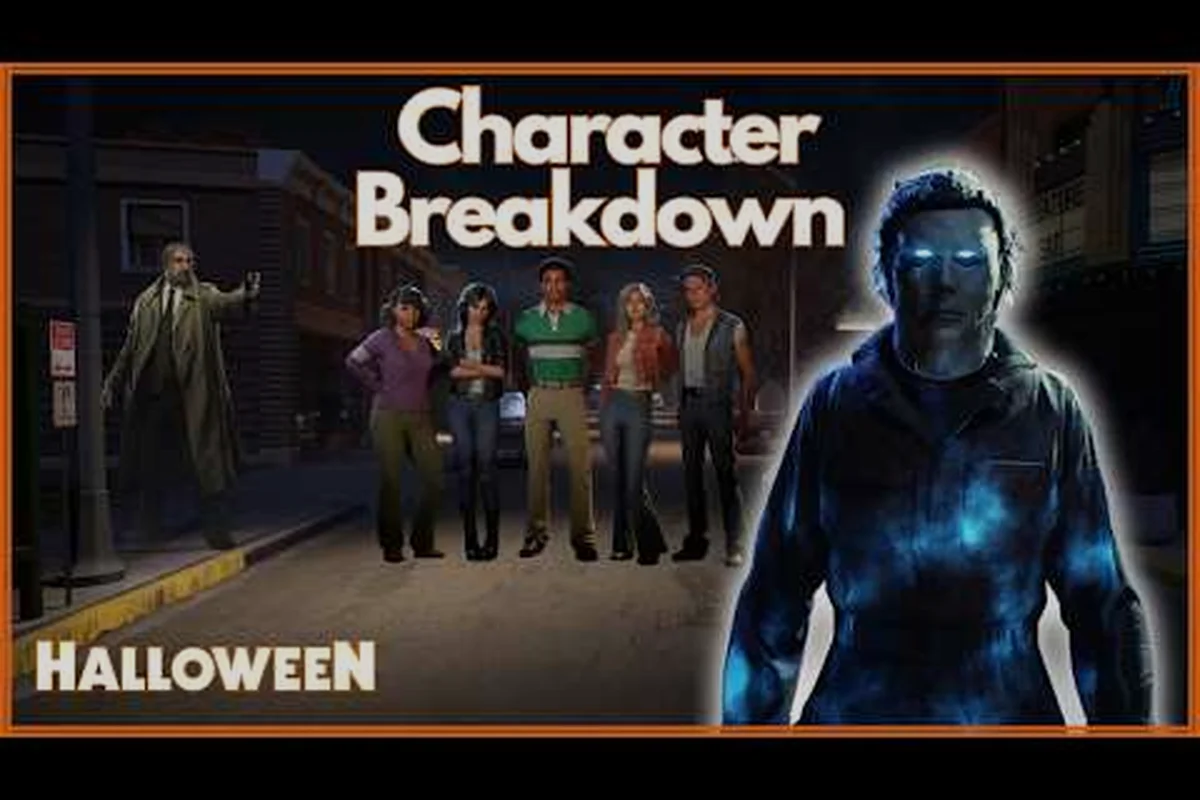
Playing as a hero in Halloween: The Game means stepping into the shoes of Laurie Strode and other survivors determined to protect the innocent families of Haddonfield from Michael Myers. Unlike standard multiplayer horror games where survival is purely selfish, the hero experience centers on cooperation, strategic resource management, and making split-second decisions that determine whether NPCs live or die. The Shape stalks the darkened streets with relentless precision, hunting both players and defenseless townsfolk. Your mission goes beyond personal escape—you must locate frightened civilians, guide them to safety, and alert law enforcement to create escalating patrols that pressure Michael into retreat. This guide breaks down everything you need to transform from a frightened victim into a confident protector who can turn the tide against evil. by mastering the hero abilities that give you the strength to stand your ground and strike back by mastering the hero abilities that give you the strength to stand your ground and strike back, you can learn how each ability works in our dedicated guide to Halloween The Game hero abilities. e you the strength to stand your ground and strike back by mastering the hero abilities that give you the strength to stand your ground and strike back, you can learn how each ability works in our dedicated guide to Halloween The Game Hero Abilities, where we break down cooldowns, damage values, and optimal usage patterns.
Understanding the Hero Role in Halloween: The Game
The heroes of Haddonfield represent humanity's last line of defense against pure masked evil. When you select the hero side, you inherit three critical responsibilities that define your success: keeping yourself alive, protecting NPC families scattered across the map, and coordinating with your human teammates to maximize survival outcomes. Unlike Michael Myers, who operates with singular purpose and overwhelming physical power, heroes must juggle multiple objectives simultaneously while working with limited resources and information.
Core Hero Responsibilities
Each hero player must internalize a prioritization hierarchy that guides decision-making throughout the match. Your first obligation is maintaining awareness of Michael's position and movement patterns, which requires constant visual and audio scanning of your surroundings. The Shape telegraphs his presence through environmental changes—lights flickering, doors slamming, and the ominous music cue that signals his proximity. Veteran heroes develop an instinctive threat radar that triggers defensive positioning long before they spot Michael directly.
Beyond self-preservation, you carry the weight of civilian lives on your shoulders. NPC families spawn throughout Haddonfield in residential homes, vehicles, and public buildings, each group requiring extraction to designated safe zones. These civilians possess no combat capability and move at walking speed, making them exceptionally vulnerable to Michael's pursuit. A hero who ignores NPC welfare in favor of personal survival fundamentally misunderstands the victory conditions that determine whether heroes win or lose the match.
Team coordination amplifies individual effectiveness exponentially in Halloween: The Game. Four heroes working in loose pairs can cover more ground, share intelligence about Michael's location, and provide backup when one player attracts The Shape's attention. Communication becomes your most valuable asset, whether you're warning teammates about approaching danger, requesting assistance with NPC escorts, or coordinating police alert timing to create maximum pressure on Michael during critical rescue sequences.
Best Hero Builds and Loadout Optimization
Hero effectiveness hinges heavily on loadout selection, which determines your toolkit for the entire match. Every hero begins with a baseline selection of everyday items—flashlights to disorient Michael, baseball bats for brief stun windows, and medical supplies to heal yourself or teammates. However, the game rewards strategic preparation through item discovery scattered across the map, allowing you to upgrade your capabilities as matches progress.
Recommended Starting Loadouts by Playstyle
| Playstyle | Primary Item | Secondary Item | Utility | Strategic Role |
|---|---|---|---|---|
| Rescuer | First Aid Kit | Flashlight | Lockpick | Prioritize NPC locations, excel at extraction |
| Scout | Binoculars | Speed Boost Pill | Walkie-Talkie | Map awareness, early warning system |
| Combat | Baseball Bat | Molotov Cocktail | Flare Gun | Engage Michael directly, create distractions |
| Support | Traps | Flare Gun | Flashlight | Protect rescue points, area denial |
The rescuer build maximizes your contribution to NPC survival, which correlates directly with victory conditions. First aid kits allow you to heal NPCs who take damage during extraction, while lockpicks grant access to locked buildings where frightened families shelter. Flashlights serve dual purposes—illuminating dark areas where Michael stalks and temporarily stunning The Shape when shined directly in his mask during close encounters.
Scout builds emphasize information gathering and team support over direct intervention. Binoculars extend your vision range dramatically, allowing you to spot Michael from extreme distances and communicate his position to teammates before visual contact becomes dangerous. Walkie-talkies enable rapid coordination across the map, though you sacrifice combat capability that becomes critical when Michael corners isolated heroes or civilians.
Item Acquisition Strategy
Pre-positioned items respawn periodically throughout Haddonfield, but high-value equipment like flare guns and molotov cocktails appear less frequently and in predictable locations. Experienced heroes memorize spawn points for critical items and plan their early-game routes to maximize loadout potential before the first NPC rescue attempt. Map control during the opening minutes directly influences your team's late-game strength.
Environmental improvisation plays a significant role in hero effectiveness. Breakable windows provide escape routes when Michael corners you indoors. Kitchen knives found in residential properties offer last-ditch combat options when your primary weapon proves insufficient. Furniture can barricade doors temporarily, buying precious seconds for NPC evacuation. Developing situational awareness that recognizes these improvised opportunities separates average heroes from exceptional ones who consistently outperform their loadout limitations.
How to Call the Police and Master Alert Mechanics
Alerting law enforcement represents the most impactful action heroes can take to shift match momentum in their favor. The police alert system operates through a progressive escalation model where each successful alert increases patrol intensity, ultimately creating conditions where Michael cannot safely pursue without risking capture. Understanding the alert mechanics thoroughly determines whether your team controls the match pace or reacts helplessly to Michael's hunting rhythm.
Police Alert Mechanics Explained
The alert system requires heroes to locate specific police callboxes or use the telephone at the police station to initiate contact with Haddonfield law enforcement. Each alert consumes a cooldown period before the next call can be placed, and the effectiveness of each alert tier depends on Michael's current behavior and position. Calling the police when Michael is distant from patrol routes wastes the alert's potential impact, while hesitating during optimal windows allows The Shape to capitalize on your inaction.
| Alert Tier | Trigger Condition | Police Response | Michael Counterplay |
|---|---|---|---|
| Tier 1 | First phone call | Single patrol car | Ignore, continue hunting |
| Tier 2 | Second call (60s cooldown) | Two patrol cars, wider coverage | Avoidance becomes necessary |
| Tier 3 | Third call (90s cooldown) | Helicopter overhead, instant detection | Severe movement restriction |
| Tier 4 | Fourth call (120s cooldown) | Aggressive arrests, rapid response | Defense becomes primary strategy |
Successful police alerts force Michael into reactive positioning, dedicating attention to avoiding law enforcement rather than hunting heroes and NPCs. This creates golden windows for aggressive rescue operations, allowing heroes to extract civilians with reduced Michael pressure. Teams that master alert timing control match flow entirely, dictating when Michael can safely pursue and when he must retreat to preserve his own advantage.
Optimal Alert Timing Strategies
Strategic alert placement considers Michael's current position, active rescue operations in progress, and the cooldown state of remaining alerts. When teammates are actively extracting NPCs, immediately preceding the extraction with a police alert forces Michael to choose between intercepting the rescue or avoiding law enforcement. This Hobson's choice creates guaranteed value regardless of Michael's decision, as either outcome benefits the hero team.
The fourth-tier alert transforms the match entirely, introducing helicopter surveillance that detects Michael's position continuously and dispatches rapid-response units when he approaches heroes. Advanced hero teams coordinate this tier-four alert with simultaneous multi-point rescue attempts, exploiting Michael's inability to be everywhere at once. The Shape becomes effectively neutralized during tier-four patrols, reduced to opportunistic strikes rather than systematic hunting.
NPC Rescue Strategies: Saving Families Across Haddonfield
Civilians in Halloween: The Game are utterly defenseless against Michael Myers, making hero intervention essential for their survival. NPC families spawn throughout residential areas in groups of two to four individuals, each family unit requiring escort to designated safe zones that appear on the map once discovered. Failed rescues—NPCs killed by Michael before extraction—accumulate as penalties that ultimately determine victory or defeat for the hero team.
NPC Behavior and Vulnerability Windows
NPCs exhibit predictable behavior patterns that inform rescue timing and approach strategy. Families begin each match hiding inside buildings, emerging only when heroes approach or when Michael draws near with proximity-based panic triggers. Interior NPCs remain stationary until direct contact initiates their follow behavior, while exterior NPCs may wander toward apparent safety zones when left unattended. This split behavior requires heroes to adapt tactics based on NPC location and state.
Michael demonstrates heightened interest in NPCs once detected, often breaking off pursuit of heroes to intercept civilian groups. This behavior creates exploitable patterns where heroes can bait Michael away from high-value objectives or create diversions that buy extraction time. However, over-reliance on NPC-baiting risks casualties when Michael correctly reads the feint and strikes the baiting hero instead. Balanced aggression and caution defines successful rescue operators.
Safe Zone Extraction Protocols
| Extraction Phase | Hero Actions | NPC Behavior | Risk Factors |
|---|---|---|---|
| Approach | Scout perimeter, confirm Michael distance | Hiding indoors or crouched outdoors | Detection triggers Michael interest |
| Contact | Call out to NPCs, initiate follow command | NPCs break hiding, follow nearest hero | Follow delays during panic moments |
| Transit | Lead NPCs along cover-rich routes | Move at walking speed, bunch together | Michael intercept during open ground |
| Deposit | Enter safe zone, confirm NPC entry | NPCs run to designated marker | Late Michael appearance, last-second saves |
Safe zones scatter throughout Haddonfield in fixed locations that heroes must memorize through repetition. Each zone accepts unlimited NPC deposits, making concentrated rescue operations viable once a secure extraction point is identified. However, Michael learns safe zone locations through observation, creating ambush opportunities that punish careless extraction timing. Experienced heroes vary routes and timing to prevent predictable pattern exploitation.
Developing efficient rescue routes that minimize exposure time dramatically increases extraction throughput. Rather than rescuing NPCs in isolation, strategic heroes gather multiple family groups along transit paths, creating convoy formations that deliver several families simultaneously. This approach sacrifices individual rescue speed for aggregate throughput, which proves more valuable for match victory as accumulated rescue count determines final outcomes.
Team Coordination and Communication Best Practices
Halloween: The Game rewards coordinated teams exponentially more than disconnected individual play. Four heroes operating with shared intelligence, synchronized objectives, and mutual support consistently outperform solo heroes attempting to juggle all responsibilities without assistance. Establishing communication protocols before matches begins creates the foundation for effective coordination that distinguishes skilled hero teams from casual groups.
Information Sharing Frameworks
Effective communication begins with standardized callout terminology that all teammates understand instantly. Michael's position should be reported using consistent directional language ("Michael north of the school" rather than vague warnings like "he's coming"), while NPC locations benefit from building identification and family count details. Critical information categories include threat position, civilian locations, item discoveries, and safe zone status, each requiring distinct communication patterns.
Role assignment during the pre-match selection phase establishes accountability that prevents the diffusion of responsibility common in chaotic matches. Assigning primary rescuer, scout, alert coordinator, and medic roles creates clear ownership of essential functions without requiring constant real-time negotiation. However, role flexibility remains important as circumstances evolve—scouts who spot Michael should alert resurreers to imminent danger regardless of nominal role boundaries.
Advanced Coordination Techniques
Pair-based operations balance coverage breadth with mutual support capability. Two-hero teams can separate to cover more ground while maintaining close enough proximity to respond within seconds when either member triggers Michael's interest. This pairing strategy adapts throughout matches as priorities shift—aggressive early-game pairs may split during mid-game cleanup phases when fewer threats remain active.
Cross-map rescue coordination requires exceptional timing synchronization between distant hero pairs. When heroes on opposite map extremities execute simultaneous rescues, Michael faces an impossible choice between intercepting either operation. Even brief hesitation from Michael creates guaranteed value, as one rescue completes while he considers the intercept decision. Skilled teams exploit this dynamic throughout matches, creating constant pressure that exhausts Michael's options.
The official Halloween: The Game Discord community offers coordination templates and voice channel guides that experienced players developed through thousands of matches. New teams benefit from reviewing these community resources before attempting advanced coordination without established frameworks.
Common Hero Mistakes and How to Avoid Them
Novice heroes consistently fall into predictable patterns that Michael exploits ruthlessly. Understanding these common mistakes transforms player development trajectory by allowing conscious correction of behaviors that otherwise persist through hundreds of matches without improvement. Each mistake compounds others, creating death spirals that end matches quickly and unsatisfyingly.
Tactical Error Patterns
Selfish survival prioritization represents the most fundamental hero mistake. Players who abandon NPC rescue to preserve their own life fundamentally misunderstand victory conditions—personal survival matters only insofar as it enables NPC extraction. Michael players recognize this pattern immediately and exploit it by pressuring heroes who demonstrate rescue hesitancy, knowing those heroes will break off to self-preserve rather than complete extraction sequences.
Overcommitment to lost causes wastes critical time and resources. When Michael corners NPCs in locations without escape routes, aggressive hero intervention often results in additional casualties rather than successful extractions. Experienced heroes recognize unwinnable situations and redirect attention to salvageable rescues rather than feeding additional victims to Michael through doomed heroics.
Poor alert timing represents perhaps the most consequential tactical error available to hero teams. Alerts called during periods of low pressure—early matches before Michael establishes hunting patterns, or late matches after most NPCs already died—waste the escalation potential that police summons provide. Each missed alert window extends Michael's effective hunting time, directly correlating with reduced rescue success rates.
Positional Awareness Failures
Environmental unawareness kills heroes who fail to track their surroundings systematically. Michael exploits heroes absorbed in NPC interactions, striking during the distraction window when attention focuses entirely on civilian management rather than threat monitoring. Disciplined heroes alternate attention between immediate NPC interaction and environmental scanning, maintaining threat awareness even during critical rescue sequences.
Noise discipline matters significantly in Halloween: The Game, where audio cues reveal hero positions to attentive Michael players. Unnecessary sprinting, careless door opening, and loud voice communication all telegraph hero locations across distances far exceeding visual range. Silent movement protocols—walking except during emergencies, closing doors quietly, using proximity chat sparingly—dramatically reduce Michael's information advantage.
Frequently Asked Questions
What is the best hero class for beginners in Halloween: The Game?
The rescuer class provides the most forgiving introduction to hero gameplay, offering medical capability that sustains both personal and NPC survival during learning matches. Rescuer loadouts emphasize NPC interaction over combat engagement, allowing beginners to focus on understanding rescue mechanics without the additional complexity of direct Michael confrontation. Flashlight utility provides emergency escape options when mistakes occur, making rescuer builds the recommended starting point for new hero players.
How do police alerts work in Halloween: The Game?
Police alerts initiate through specific map locations, typically phone callboxes or the police station telephone. Each alert consumes a cooldown period before the next becomes available, and alerts escalate through four tiers of increasing effectiveness. Tier-one alerts summon single patrol cars, while tier-four alerts introduce helicopter surveillance and aggressive rapid response that severely restricts Michael's movement options throughout the remainder of the match.
Should heroes prioritize their own survival or NPC rescues?
NPC rescue efficiency determines match victory, making civilian extraction the consistent priority over personal survival. However, hero survival enables future rescues, meaning smart self-preservation that preserves rescue capacity remains important. The balance involves avoiding unnecessary risks that sacrifice hero availability for marginal rescue gains, while maintaining aggressive extraction schedules that maximize civilian survival across the match duration.
How many NPCs need to be rescued for heroes to win?
Victory conditions require heroes to rescue a significant portion of the civilian population scattered across Haddonfield. The exact threshold varies based on game mode and settings, but exceeding Michael's kill count determines hero victory. Teams should target maximum possible rescues rather than meeting minimum thresholds, as excess rescues create score padding that protects against unexpected complications during late-match sequences.
What items help heroes escape Michael Myers most effectively?
Flashlights provide the most consistently useful escape tool by temporarily stunning Michael when shined directly at his mask during close encounters. Speed boost pills offer direct movement advantage for brief periods, valuable for crossing exposed ground or reaching distant NPCs before Michael intercepts. Flare guns create temporary safe zones through area denial, forcing Michael to route around rather than through flare-affected areas.