
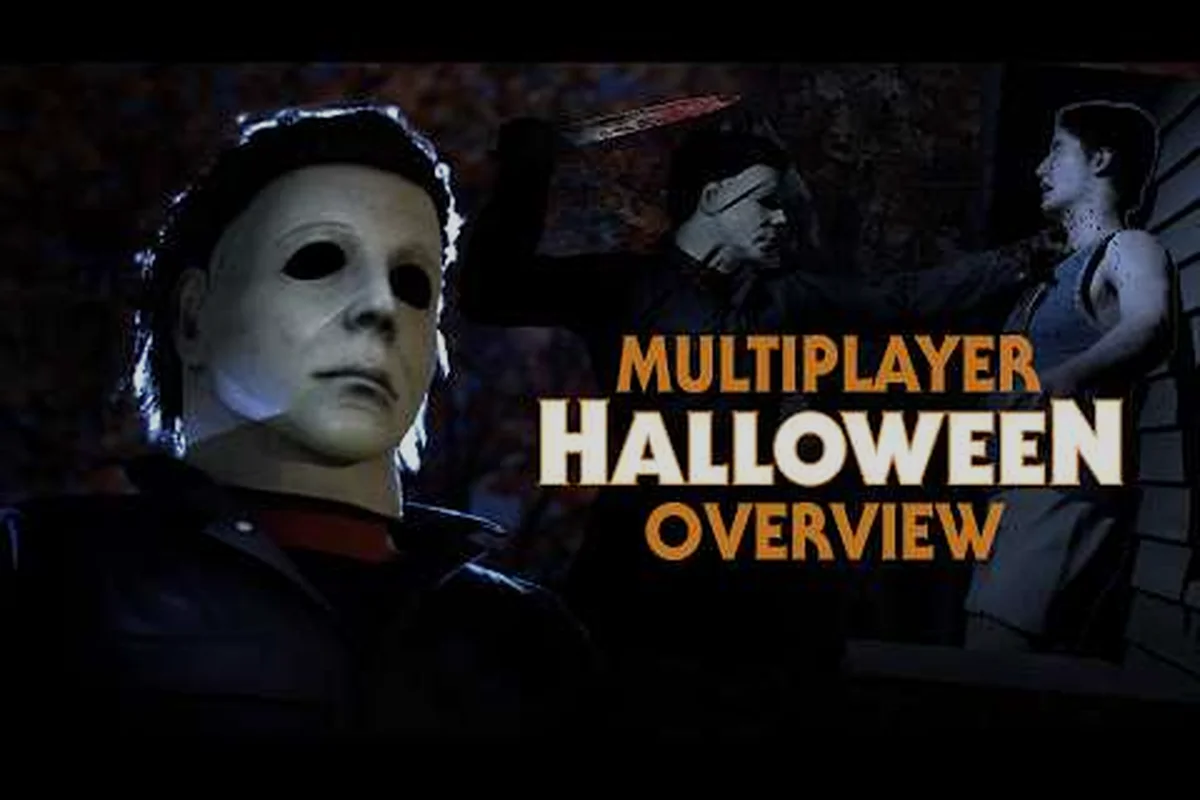
A strong Halloween: The Game multiplayer loadout transforms four scattered Heroes into a coordinated escape unit that can actually pressure Michael Myers. The wrong gear split means wasted drops, slow rescues, and a lobby that folds before the police alert ever goes out. This guide breaks down the exact team composition, gear priority, and objective flow that community groups are using to survive Haddonfield in 1v4 matches.
Understanding the 1v4 Hero Loadout Framework
The core of any effective Halloween: The Game multiplayer loadout is understanding that four Heroes are not four solo survivors. One player is Michael Myers, and the other four need to function as a single rescue machine with overlapping responsibilities. According to the official Steam page, the game is built around elevated asymmetrical multiplayer where coordination determines whether NPCs get equipped, families get rescued, and the police actually arrive.
Most losing lobbies fail because they treat the Hero side like a free-for-all race. Three players sprint toward the first weapon drop they see, nobody watches the streets, and Michael Myers gets three downs before the first NPC is even equipped. A functional loadout assigns roles before the match starts, then adjusts based on which gear actually spawns.
Here is the baseline role framework that experienced groups use: a 1v4 hero loadout built around one dedicated “carry” survivor running objective-focused perks like Generator Rush or Locker Sprint, while the other three run support or bait kits (Flashlight Stun, Trap Disarm, Decoy) to peel the killer off key objectives. The carry never wastes time on combat unless the killer is actively breaking a generator; support players rotate between map control and drawing aggro toward dead zones like the Cornfield or Junkyard, where loops are long and the killer’s chase time is wasted. This split works because the killer can only pressure one survivor at a time, so the three non-carries force the killer into inefficient 20–30 second chases while the carry progresses objectives nearly uninterrupted.
-
Point Hero — grabs the first melee weapon, stays mobile, and baits Michael Myers away from objective zones
-
Rigger — focuses on finding and delivering equipment to NPCs, often the quietest player in the lobby
-
Caller — tracks the police alert progress, pings objective states, and directs rotations
-
Flex — fills gaps, covers downed teammates, and switches between rigging and combat as needed
The key insight is that a Halloween: The Game multiplayer loadout is not just about what you carry. It is about who commits to which objective, because Michael Myers punishes hesitation more than any other killer in the genre. When all four Heroes understand their job, gear drops stop becoming loot races and start becoming coordinated resupply points.
Why Random Gear Splits Fail
Random gear distribution kills more Hero teams than bad aim. When a lobby opens and everyone grabs the first weapon they see, you end up with four Heroes holding melee weapons while the NPC equipment sits untouched on the far side of the map. That means zero rescue progress, zero police alert buildup, and a Michael Myers who only has to win four isolated 1v1 chases.
Community reports consistently show that the first two minutes of a match decide the outcome. If the NPC equipment is not located and delivered within that window, Michael Myers can transition from stalking to full aggression without consequence. The Shape does not need to kill all four Heroes immediately; he only needs to stall the objectives long enough for the match timer to run down.
A structured loadout fixes this by making the gear split automatic. The Point Hero takes the first weapon drop because their job is to create space, while the Rigger immediately paths toward NPC spawn zones with or without a weapon. This separation of duties is the single biggest upgrade a beginner lobby can make, and it costs nothing except a thirty-second conversation before the match starts.
Building the Best Team Comp for Objective Pressure
| Source | Video Title | Duration | Validated | Data Type |
|---|---|---|---|---|
| YouTube (IllFonic) | Bike Grab | 0:24 | 2026-08-31 | Official gameplay clip |
| YouTube (IllFonic) | Q&A Dev Stream 7/14 | 1:19:17 | 2026-08-31 | Dev commentary / match flow |
| Steam Store | Halloween: The Game | — | 2026-08-31 | Multi-player, Online PvP, Co-op, Online Co-op support |
| halloweengame.com | Official Website | — | 2026-08-31 | 1v4 asymmetrical multiplayer overview |
The halloween the game best team comp question comes up in every beginner lobby, but the answer is less about specific characters and more about role coverage. You want one player who can fight, one who can path efficiently, one who can read the map, and one who can rotate between both. That spread ensures every objective type gets attention without requiring perfect mechanical skill from anyone.
The following table breaks down the four essential roles and what each one should prioritize: the Runner (high-stamina loadout built around Sprint Perk and Adrenaline Syringe) draws Michael Myers away from capture zones by kiting him through the Haddonfield backyards, the Objective Specialist rushes Generator and Fuse Box repairs with Repair Kit and Technician Perk to convert every distraction window into progress, the Bodyguard anchors near the Escape Route with Flashlight and Taser to peel the killer off a grabbed teammate, and the Scout calls out killer rotations and Totem spawns from elevated sightlines using Walkie-Talkie and Binoculars so the other three never waste time double-committing to the same objective.
| Role | Primary Job | First Drop Priority | Rotation Trigger |
|---|---|---|---|
| Point Hero | Draw Michael Myers away from objectives | Melee weapon | When a teammate gets downed nearby |
| Rigger | Deliver equipment to NPCs | Objective item | When NPC equipment is fully delivered |
| Caller | Track police alert and ping rotations | Nothing specific | When objective state changes |
| Flex | Cover gaps and support downs | Whatever is left | Constantly, based on comms |
The Point Hero role is the most misunderstood part of the halloween the game best team comp. Many players think this means fighting Michael Myers head-on, but that is a losing trade against a patient killer. The actual job is to make enough noise that Michael Myers has to choose between chasing you and stopping the Rigger. If you can keep him on you for forty-five seconds while the Rigger delivers two equipment drops, that is a won exchange even if you go down.
The Caller role scales with lobby experience. In a halloween the game 4 friends guide context, the Caller is usually the player who has the best mental map of Haddonfield, because they need to direct rotations without seeing what everyone else sees. A good Caller announces when the police alert is halfway, when Michael Myers has committed to a chase, and when a specific objective zone is safe to enter.
Balancing Fighters and Runners
One of the biggest mistakes in the halloween the game best team comp is stacking too many fighters. If three Heroes all grab melee weapons and try to brawl with Michael Myers, you lose because the objective timer does not care about your damage numbers. Michael Myers wins by stalling, not by winning every fight, so a comp that ignores rigging plays directly into his win condition.
The optimal split for most lobbies is one dedicated fighter, one dedicated runner, and two flexible players who can do both. This gives you enough combat presence to punish an overcommitted Michael Myers while keeping at least two players focused on NPC equipment and rescue progress. When the police alert reaches critical mass, the two flex players can shift fully into combat to protect the final stretch.
Community data from active lobbies suggests that the best comps rarely have more than two Heroes fighting at once. The other two should always be working an objective, because every second spent brawling is a second Michael Myers does not have to spend defending his objective zones. If you find your team losing matches where everyone fights well, the problem is almost always that nobody was rigging.
Coordinating Weapon Drops and NPC Equipment
The halloween the game multiplayer objective flow depends on how quickly your team converts spawn knowledge into delivered equipment. Weapon drops and NPC equipment spawn in different zones, which means your loadout needs to account for both supply lines. A common beginner mistake is treating every drop as equally important, when in reality the NPC equipment is the actual win condition and weapons are just tools to protect it.
Here is the priority order that experienced groups use when a new drop appears: the Bystander or designated runner claims it first if it is a mobility item such as the Bike or Car Keys, because escaping objectives are the only win condition that does not require confronting the Killer; next, any Weapon like the Shotgun or Revolver goes to the player whose current loadout lacks a stun or damage tool, since a team with four melee-only survivors cannot reliably break a Grapple; finally, Medkits and Adrenaline syringes are assigned to whoever is holding the Fuse or Generator Part, because that player is most likely to be intercepted while completing the Escape Route objective.
-
NPC equipment — always the highest priority, because it directly advances the rescue and police alert objectives
-
Melee weapons — valuable for the Point Hero and Flex, but only worth contesting if the Rigger is already covered
-
Consumables and utility items — situational, usually grabbed by the Caller or Flex when passing through
-
Decoy items — low priority unless Michael Myers is actively patrolling the equipment route
The reason NPC equipment outranks everything is simple: Michael Myers cannot win if the objectives complete, no matter how many downs he gets. A team that delivers all NPC equipment and triggers the police alert will escape even if two Heroes are on the ground. That is the entire structure of the 1v4 win condition, and your Halloween: The Game multiplayer loadout should reflect it in every decision.
When you watch the Bike Grab official video, you can see how even a single objective interaction creates pressure on Michael Myers. The Hero does not need to win a fight to be useful; they just need to complete the grab while the rest of the team controls space. That same logic applies to every NPC equipment delivery.
Reading the Lobby Before the First Drop
The halloween the game online lobby phase is where most loadout mistakes get locked in. Players join, pick random roles, and then scramble when the match starts because nobody established a plan. A thirty-second lobby conversation about who is doing what eliminates half of the coordination failures that lose matches.
The best way to run the halloween the game online lobby is to have one player call roles before the match timer starts. The Caller announces the split, the Point Hero confirms they will take the first melee drop, and the Rigger states which NPC zone they will path toward. This does not need to be a long discussion, but it does need to happen every match, because assumptions in a 1v4 horror game are how Michael Myers gets free early downs.
If you are running a halloween the game 4 friends guide setup with the same group every night, you can skip most of this conversation because roles become automatic. But for random lobbies or mixed groups, the thirty-second check-in is the difference between a coordinated escape and a scattered wipe. The lobby guide covers the broader matchmaking and invite flow if you are still getting groups together.
Advanced Multiplayer Loadout Rotations
| Multiplayer Mode | Team Composition | PvP Format | Co-op Support | Match Flow Focus |
|---|---|---|---|---|
| 1v4 Asymmetrical | 1 Michael Myers vs up to 4 Heroes | Online PvP | Online Co-op | Stalk, terrorize, alert police, rescue families |
| Heroes (Haddonfield) | Up to 4 players | Versus Michael | Yes | Coordinate, equip NPCs, rescue families |
| Michael Myers | 1 player | Versus Heroes | No | Stalk, terrorize, avoid being overwhelmed |
Once your group has the basic Halloween: The Game multiplayer loadout working, the next step is building rotations that respond to Michael Myers rather than just executing a static plan. A static plan assumes Michael Myers will play passively, which works against beginners but falls apart when the killer knows how to pressure objective zones. Advanced rotations use role swaps and timed aggression to force Michael Myers into bad commitments.
The core rotation loop looks like this: at the top of each round, one player holds the Shotgun on the second-floor landing to cover the Generator and the Fuse Box while a second rotates between Medkit spawns near the Kitchen and Basement stairs. The third player, running Stamina perks, baits Michael through the Living Room window loop to burn his Stalk meter, and the fourth flexes between Door Barricade resets and Car Battery progress. This rotation matters because Michael's Stalk meter drains faster when survivors break line-of-sight for more than three seconds, so the bait player must never let the killer hold a corner angle for free — every loop resets the drain timer and buys the Generator player roughly eight extra seconds per cycle.
-
Opening — Rigger paths to NPC equipment while Point Hero scouts the nearest weapon drop
-
Early pressure — Point Hero takes a fight or makes noise to draw Michael Myers away from the Rigger
-
Mid-match pivot — Caller announces when the police alert is halfway, and the Flex commits fully to either combat or rigging
-
Endgame hold — all four Heroes collapse toward the final objective, with the Point Hero body-blocking if needed
The pivot moment is where most advanced groups win or lose. If the Flex commits to combat too early, you lose rigging speed and Michael Myers can stall the alert. If the Flex commits to rigging too late, you end up with equipment delivered but no one alive to protect the final push. The Caller's job is to make that pivot obvious by announcing objective state in short, clear bursts.
A strong rotation also accounts for downed teammates. When a Hero goes down, the nearest player should not automatically sprint to revive. Instead, the Caller decides whether the revive is safe or whether the downed player is bait for a Michael Myers ambush. Sometimes the correct play is to leave the down and keep rigging, because trading one Hero for one delivered equipment drop is a winning exchange over the full match.
When to Fight Michael Myers
Fighting Michael Myers in a Halloween: The Game multiplayer loadout is a resource decision, not a skill expression. You fight when the fight protects an objective, and you run when the fight is just ego. The Point Hero is the only player who should consistently take fights, and even they should disengage the moment Michael Myers overcommits to the chase.
The best fight timing is when Michael Myers is actively moving toward the Rigger or an NPC equipment zone. In that moment, the Point Hero can force the killer to turn around and deal with them instead, which buys the Rigger ten to fifteen seconds of uninterrupted objective time. That is a good trade even if the Point Hero takes damage or goes down, because the equipment delivery is worth more than one Hero health bar.
The worst fight timing is when no objective is at risk and the Point Hero just wants to test their mechanics against the killer. Michael Myers wins that trade almost every time, because his entire kit is built around punishing isolated Heroes who overstay. If you find yourself fighting for no reason, you are playing his game, and your loadout does not matter at that point.
Frequently Asked Questions
What is the best Halloween: The Game multiplayer loadout for beginners?
A beginner-friendly Halloween: The Game multiplayer loadout uses one melee fighter, one dedicated equipment runner, and two flexible supports. The key is assigning roles before the match starts, then prioritizing NPC equipment over weapon drops. This structure gives you objective pressure while keeping enough combat presence to punish an aggressive Michael Myers.
How do I coordinate a halloween the game 4 friends guide setup?
Run the same four roles every match: Point Hero, Rigger, Caller, and Flex. Spend thirty seconds in the online lobby confirming the split, then let the Caller direct rotations based on objective state. Consistent roles build muscle memory, which means your group can focus on reading Michael Myers instead of figuring out who is doing what mid-chase.
What is the most important multiplayer objective in Halloween: The Game?
The NPC equipment delivery chain is the highest-priority multiplayer objective, because it drives rescue progress and builds the police alert. Michael Myers wins by stalling, so completing equipment drops forces him to play aggressively, which creates openings for your Point Hero. Weapon drops are secondary and only matter as protection for the rigging line.
Should all four Heroes fight Michael Myers at once?
No. Stacking four fighters into a brawl plays directly into Michael Myers's stall win condition. The optimal split keeps one dedicated fighter, one dedicated runner, and two flex players who rotate between combat and objectives. When more than two Heroes are fighting at once, your equipment delivery speed drops and the police alert stalls.
How does the halloween the game online lobby affect loadout success?
The online lobby is where role assignment happens, and skipping that step causes scattered early matches. A thirty-second check-in where the Caller confirms the four-role split prevents gear races and ensures the Rigger paths to NPC equipment immediately. Random lobbies without this check-in routinely lose to Michael Myers before the first objective completes.